In this article

share:

Robinhood Platinum Card: Worth the $695 Annual Fee?

The Robinhood Platinum Card has a $695 annual fee, 5x dining, portal-based travel rewards, and a long list of credits. Here’s who it fits, who should skip it, and whether it is actually worth it.
Written by: Sebastian FungLast updated: March 11, 2026
share:
robinhood platinum card.png
Advertiser Disclosure: Some of the card links and other products that appear on this website are from companies which AskSebby will earn an affiliate commission or referral bonus. AskSebby is part of an affiliate sales network and receives compensation for sending traffic to partner sites, such as CreditCards.com. This compensation may impact how and where products appear on this site (including, for example, the order in which they appear). This site does not include all credit card companies or all available credit card offers.
The Robinhood Platinum Card charges $695 per year and markets itself as offering over $3,000 in annual value. If you can realistically use the credits above the annual fee cost, even after discounting the ones you don't use, it can be a solid pickup. But if you're a traveler who values points and miles, a casual DoorDash user, or someone who rarely stays at luxury hotels, the math falls apart quickly. Here's what you actually need to know.

What Is the Robinhood Platinum Card?


Robinhood unveiled the Platinum Card at its "Take Flight" event in March 2026, positioning it directly against the American Express Platinum Card®, Chase Sapphire Reserve®, and  Capital One Venture X Rewards Credit Card.
 
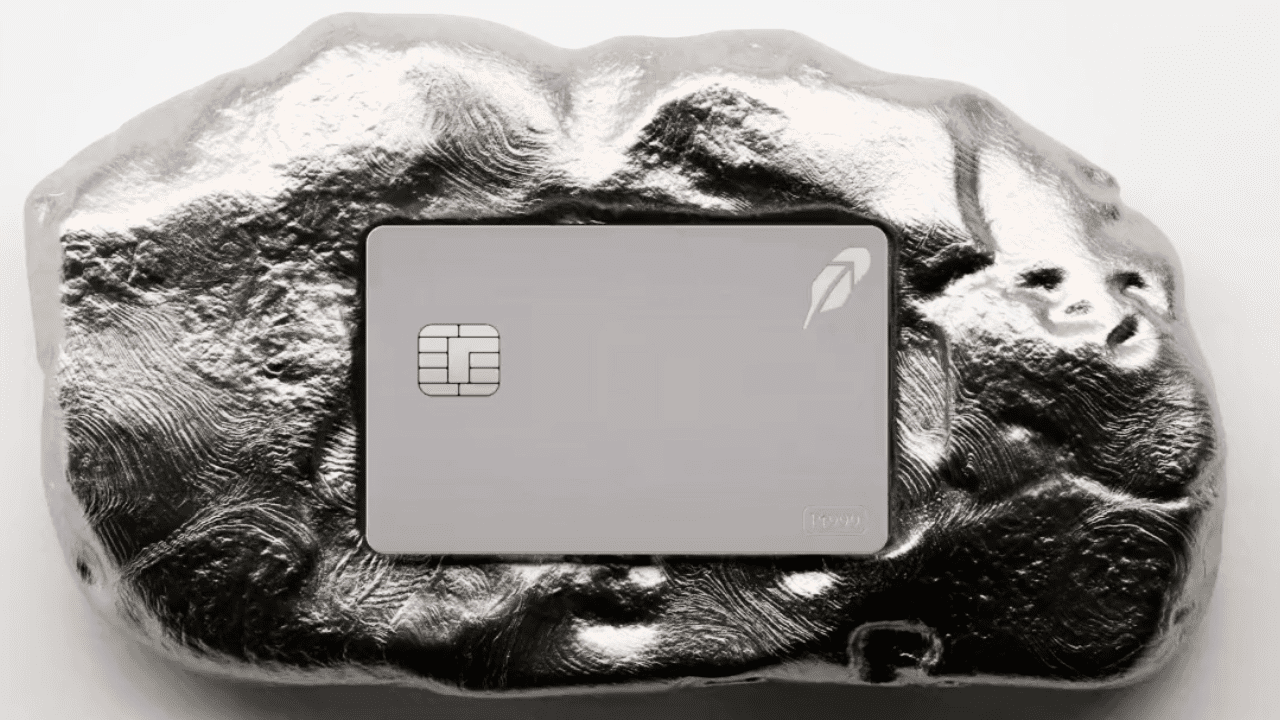
The card is a Visa Infinite product, currently invite-only (you'll need an active Robinhood account), and issued by Coastal Community Bank, the same issuer behind the Robinhood Gold Card. The physical card is literally plated in 99.9% pure platinum, and authorized users receive a stainless steel one at no cost. Whether the substance behind it matches the metal is a different question.
 
This is Robinhood's second credit card. Their first, the Robinhood Gold Card, built a devoted following for one reason: 3% flat cash back on everything, with a $5/month Robinhood Gold membership. Simple, powerful, hard to beat for everyday spending. The Platinum takes a radically different approach: higher fee, a thick stack of lifestyle credits, portal-dependent travel bonuses, and a base earn rate of just 1%.
 
That tradeoff deserves serious scrutiny.

Robinhood Platinum Card Calculator


Ask Sebby crunches the numbers for you to calculate the Expected Value of the Robinhood Platinum Card expected value of points, we derive the approximate dollar value based on the numbers you enter in the calculator. Scroll down to the end of the post to see our methodology. The calculator below contains default figures and serves as an example only. Users should insert their own data for the most accurate results.

Calculation Methodology


The results from the above calculator are based on your amount of spending on different categories and how much relative value you assign to the other benefits. 

The “Years” referenced in the calculator refer to the cardmember year, based on when you are approved for the card. 

  • Year 1 = first 12 months of card membership
  • Year 2 = the following 12 months afterward

Intro Bonus


The Robinhood Platinum Card does not currently offer an intro bonus. If you value large intro bonuses, I would consider getting one of the flagship premium cards instead.

💎 Major Refresh
card art for the American Express Platinum Card® cardAmerican Express Platinum Card®
You may be eligible for as high as 175,000 Membership Rewards® Points after spending $12,000 in eligible purchases on your new Card in your first 6 months of Membership. Welcome offers vary and you may not be eligible for an offer.

Annual fee: $895

Terms apply | Rates & Fees

Sebby's take: Despite a hefty annual fee, you get up to $3,500 in credits that help offset this. The card is great for people who benefit from lounge access, travel protections, and access to programs like Fine Hotels & Resorts.

💎 Major Refresh
card art for the Chase Sapphire Reserve® cardChase Sapphire Reserve®
Earn 125,000 bonus points after you spend $6,000 on purchases in the first 3 months from account opening.

Annual fee: $795

Sebby's Take: This premium travel card is packed with perks like airport lounge access, travel credits, and elevated rewards on travel and dining. It’s a top choice for frequent travelers who want premium benefits and flexible redemption options

✈️ Best Travel Card
card art for the Capital One Venture X Rewards Credit Card cardCapital One Venture X Rewards Credit Card
Earn 75,000 bonus miles when you spend $4,000 on purchases in the first 3 months from account opening

Annual fee: $395

Sebby's take: Flagship travel card and offers lounge access through participating Priority Pass and Capital One lounges. You earn competitive multipliers on hotels, rental cars, and flights booked through Capital One Travel and 2x on everything else. The annual fee is offset through a $300 travel credit and 10,000 anniversary miles.

Annual Fee and Credits: The Real Terms


The marketing headline is $3,000+ in annual value for a $695 fee. But marketing value and realized value are two very different things. Let's go through every credit with honest eyes.
 

✅ Travel Credit — Up to $300/Year

Terms: $150 every six months. Eligible purchases include rideshares, hotel charges, flights, and other travel-related purchases. You do not need to book through the Robinhood travel portal.
This is the cleanest credit on the card. If you take even one trip per half-year, or just use Uber regularly, you'll hit it without thinking. Treat this as close to face value. This one is good.
 

🔴 Hotel Credit — Up to $500/Year

Terms: $250 every six months, but only $100 of each $250 credit applies to standard hotel bookings. The full $250 requires booking a luxury hotel through the Robinhood travel portal, with a two-night minimum stay.
This is where the headline value starts to leak. A Waldorf Astoria in New York runs $1,500+ per night. Beverly Hills clocks in at $900–$1,200. Even Osaka, which is relatively affordable by luxury standards, can run $500 a night at an eligible property. You're getting $250 back on a booking that costs far more.
The card does include perks like daily breakfast for two and room upgrades at luxury properties — but those same benefits are available through Virtuoso and other travel advisor programs without a $695 annual fee. There's nothing proprietary here. For many cardholders who don't regularly stay at luxury hotels, this credit will be worth well under 50 cents on the dollar. Be very cautious about how you value this one.
 

😐 Airport Lounge Access — Priority Pass Select

Terms: Priority Pass Select membership for the primary cardholder.
Priority Pass Select is the industry-standard inclusion at this price tier. The problem is, it's also the same Priority Pass that has been steadily degrading: restaurants getting dropped from the network, lounges getting crowded, and guest fees being applied. Cards like the American Express Platinum Card® and  Chase Sapphire Reserve® at least have proprietary lounge networks (Centurion Lounges and Sapphire Lounges, respectively) you can count on. Robinhood has no equivalent. Not bad, but not differentiated either.

Terms apply to American Express benefits and offers. Enrollment may be required for select American Express benefits and offers. Visit americanexpress.com to learn more.
 

😐 Global Entry / TSA PreCheck — $120 Every 4 Years

Table stakes at any fee above $300. Useful if you don't already have it,  but plenty of $95-to-$250 cards offer this exact same credit. At $695, it's the bare minimum expectation, not a selling point.
 

🔴/✅ Autonomous Ride Credit — Up to $250/Year

Terms: $20/month, $30 in December. Valid for select autonomous ride services — specifically Waymo and Zoox (Amazon).
Waymo currently operates in: San Francisco Bay Area, Los Angeles, Phoenix, Austin (via Uber), Atlanta (via Uber), Miami, Dallas, Houston, San Antonio, and Orlando. Zoox is currently in Las Vegas and San Francisco.
Even within those cities, service tends to concentrate in downtown corridors. If you're in the suburbs, you may be effectively locked out. And autonomous rides currently tend to run about twice the price of a standard Uber, so using this credit means paying a premium for the privilege. If you're in a covered city and already using these services: ✅. Otherwise: 🔴.
 

✅ Dining Credit — Up to $250/Year

Terms: $20/month, $30 in December. Valid at approximately 15,000 participating restaurants nationwide.
The most practically usable recurring credit on the card after the travel credit. At $20 a month, you don't need to engineer anything; one dinner out covers it in most metro areas. The restaurant network is broad enough to be genuinely useful. This one works for most cardholders.
 

🔴 DoorDash Credit — Up to $250/Year

Terms: Two $10-off discounts per month (three in January). Minimum subtotal per order must be $50, not counting taxes and fees.
Here's the hidden trap. If you're ordering a quick lunch for yourself, you're likely spending $25–$40 before fees, under the threshold. To capture the full $250 in credits across the year, you'd need to place 25 qualifying orders all above $50 in subtotal. For people regularly ordering group meals or family dinners via DoorDash, this is manageable. For light or moderate users, the majority of this credit will quietly expire. Unless DoorDash is already a real habit with large orders, I would discount this heavily.
 

🔴 Oura Ring Membership

Terms: Complimentary one-year Oura membership, but only if you opt in AND purchase a new Oura Ring with a prepaid annual membership within six months of activating the benefit. Does not apply to existing rings, renewals, or accessories.
Since 2020–2021, Oura rings have become a standard kit for health-conscious tech people. That's precisely why this credit has limited value for the core audience Robinhood is courting: most people who want an Oura ring already own one. The credit only triggers for someone buying a brand-new ring. For the majority of potential cardholders, including most tech-savvy people drawn to this card, this credit is worth zero.
 

✅ Health Wearables Credit — Up to $200/Year

Terms: Up to $200 annually toward qualifying health wearables purchases.
Broader and more flexible than the Oura credit. If you're buying a new fitness tracker, smartwatch, or health monitoring device in the next year, $200 back is real money. Not universally useful, but solid for anyone in the health tech space. Value depends entirely on your habits.
 

😐 Function Health Membership — Up to $365/Year

Terms: Covers the Function Health annual membership. Not available in Hawaii or Rhode Island. Higher pricing applies in New York and New Jersey.
Function Health provides comprehensive blood panel testing, over 100 biomarkers covering hormones, metabolic health, inflammation markers, and more. If you're proactive about longitudinal health data and want to track your body systematically, this is genuinely valuable. If preventive lab testing isn't part of your life, it's easy to ignore entirely. Strong for the health optimization crowd. Zero for everyone else.
 

🔴 Amazon One Medical — Up to $199/Year

Terms: Covers one Amazon One Medical annual membership.
One Medical is a concierge primary care service, with same-day/next-day appointments, 24/7 virtual access, and a more premium doctor experience than a standard HMO. Useful for people without strong employer healthcare coverage. But for most people who already have solid insurance or don't need a concierge-style GP, this is near-zero value. Discount or ignore for most cardholders.
 
The core question: after honestly discounting the credits you won't use, do you clear $695 in real, realized value? For some people — high dining spenders, autonomous ride users, wellness enthusiasts — the answer is comfortably yes. For many others, breakeven is the ceiling.

Earning Rates and Multipliers


Outside of the credits, the card's earning structure is:
  • 10% cash back on hotels booked through the Robinhood travel portal
  • 5% cash back on flights booked through the Robinhood travel portal
  • 5% cash back on dining, on your first $50,000 annually
  • 1% cash back on everything else
The dining rate is genuinely strong. 5% on up to $50,000 per year is a high cap that works well for serious restaurant spenders — business owners, people who frequently entertain clients, and larger households. If you're running $3,000–$5,000 a month through restaurants, this earns meaningfully.
The travel multipliers look impressive on the surface, but they require the Robinhood travel portal, which is the key caveat. Booking through a portal rather than directly with an airline or hotel creates real friction during disruptions. When flights are canceled or hotels have issues, direct bookers are rebooked quickly. Portal bookers often end up in the middle of a finger-pointing match between the portal and the carrier, with nobody clearly responsible.
For everyday spending outside of dining and portal travel? 1% cash back is objectively poor. The Robinhood Gold Card gives you 3% flat on everything. Countless no-annual-fee cards give you 2%. The 1% base rate is not a neutral floor; it's an active cost if you're using this card for general spend.

Opportunity Cost: Cash Back vs. Points


This is the part most Robinhood Platinum coverage glosses over. And it's the most important part for anyone who travels.
The Robinhood Platinum earns cash back, not transferable points. That's a structural difference that caps the ceiling of your rewards.
With transferable points programs, Chase Ultimate Rewards, Amex Membership Rewards, Citi ThankYou Points, Capital One Miles, a 5X earn rate doesn't just mean 5% back. Those points can transfer to airline and hotel partners where redemption values routinely hit 1.5–3+ cents per point. A 5X earn rate becomes an effective 7.5–15% return on high-value redemptions.
For business and first class redemptions, Japan Airlines First, ANA First, and Emirates First, the arithmetic gets even more extreme. 80,000 points for JAL First Class to Japan is a well-known sweet spot that can represent $4,000–$8,000 in cash value against a purchase price of a fraction of that. Cash back simply doesn't get you there.
If you're a points-and-miles person, even a moderately engaged one, the structural ceiling of the Robinhood Platinum is lower than comparably priced alternatives. Cash back is simpler. It is also less powerful.

Who Is This Card Actually Good For?


Be honest with yourself about two things: your actual spending patterns, and how many of those credits you will use every single month — not in theory, but in practice.
 
This card makes strong sense if you:
  • Spend heavily on dining ($2,000–$5,000+/month) and want a clean 5% with a generous cap
  • Live in a city with active Waymo or Zoox coverage and already use autonomous rides
  • Regularly use DoorDash for group orders consistently above $50 per order
  • Travel frequently and are comfortable with portal bookings, accepting the tradeoff in disruption handling
  • Already use the Robinhood ecosystem and want a consolidated financial experience
  • Genuinely value Function Health, health wearables, and will actively use those credits
This card is probably not for you if you:
  • Are a points-and-miles traveler prioritizing premium international redemptions
  • Don't stay at luxury hotels regularly enough to unlock the $500 hotel credit
  • Are currently using the Robinhood Gold Card for its 3% flat rate (you lose that entirely)
  • Order DoorDash casually in amounts under $50 per order
  • Already have an Oura ring and won't be buying a new one
  • Don't use Function Health or One Medical and won't start

Bottom Line


The Robinhood Platinum Card is not a bad card. It's also not the disruption Robinhood is marketing it as.
The travel credit is easy to use. The dining earn rate is legitimately competitive. The hotel credit is complicated and significantly overstated for most cardholders. The DoorDash credit has a restrictive minimum that will cost many people their value. The base earn rate of 1% is a real cost for general spending. And for existing Robinhood Gold Card holders, giving up 3% flat cash back is a sacrifice that needs to clear a high bar to justify.
Run your own honest numbers. Look at each credit individually and ask how many you'll actually use, not in theory, but month in and month out. If you clear $695 in realized credit value and spend heavily on dining, the card works. If you're breakeven on credits and you're a points person at heart, you'll be better served elsewhere.
It's not broken. It's not S-tier either.

FAQs


What is the Robinhood Platinum Card annual fee? $695 per year.
Is the Robinhood Platinum Card invite-only? Yes, as of March 2026. You can request access at robinhood.com. The Robinhood Gold Card also launched invite-only before eventually opening broadly.
Does the Robinhood Platinum Card earn transferable points? No. It earns cash back only, redeemable into your Robinhood brokerage account or toward travel through their portal.
What cash back rates does the Robinhood Platinum Card offer? 10% on hotels booked through Robinhood's travel portal, 5% on flights via the portal, 5% on dining (capped at $50,000/year), and 1% on all other purchases.
Is the Robinhood Platinum Card actually made of platinum? Yes. It's plated in 99.9% pure platinum, making it noticeably heavier than typical metal credit cards.
Does upgrading to Robinhood Platinum remove the Gold Card's 3% cash back? Yes. The 3% flat cash back from the Robinhood Gold Card does not carry over. You'd earn 1% on general purchases with the Platinum.
What lounge access does the Robinhood Platinum Card provide? Priority Pass Select membership for the primary cardholder. No proprietary Robinhood lounges exist.
How does the Robinhood Platinum hotel credit work? You receive $250 every six months ($500/year). Only $100 of each $250 credit applies to standard hotels — the full $250 requires a luxury hotel booking through the Robinhood travel portal with a two-night minimum stay.
How does the DoorDash credit work on the Robinhood Platinum Card? You receive two $10-off DoorDash discounts per month (three in January). Each discount requires a minimum order subtotal of $50, not including taxes and fees.
Who is the Robinhood Platinum Card best suited for? Heavy dining spenders, Robinhood ecosystem loyalists, people in cities with autonomous ride coverage, and cardholders who will genuinely use the wellness and lifestyle credit stack. It's less compelling for points-and-miles travelers, light DoorDash users, or cardholders giving up the Robinhood Gold Card's 3% flat rate.
What bank issues the Robinhood Platinum Card? Coastal Community Bank — the same issuer behind the Robinhood Gold Card.
Is there a sign-up bonus on the Robinhood Platinum Card? As of launch, Robinhood has not announced a public sign-up bonus. All value comes from the ongoing credit structure and earning rates.

💳 Featured Card Offers


Advertiser Disclosure
American Express Platinum Card®

You may be eligible for as high as 175,000 Membership Rewards® Points

Terms apply | Rates & Fees